February 27, 2026
Dear Supt. Jason Popik,
Following the “license inspection” operation your members conducted on unceded Mi’kmaq aboriginal rights and title lands – lands that have a proven continuous use and occupancy by the Mi’kmaq for 6,500 years – you felt compelled to put out a media statement in which you denigrated the collective group of people present by stating they made crude statements and accused your members and police force of being “racist” and “white supremacists.” Also, your statements prejudge the business as being “illegal.”
Having been present at the moment this incident occurred, allow me to clarify that it was me who commented on the concept of “white supremacy.” I did not call your RCMP officers “white supremacists”. For clarity “white supremacy” is defined as “the belief that white people constitute a superior race and should therefore dominate society, typically to the exclusion or detriment of other racial and ethnic groups.” Given the history of the many, and continuous, attempts to assimilate Indians into mainstream society by governments, I was informing your members of such concepts so they would conduct themselves in a manner which would not generate such concerns. I was clear in my comment on “white supremacy” – your officers were not so called – quite the opposite as I made sure to state that I was not calling them “white supremacists.” This will be amply clear if you release the actual recording.
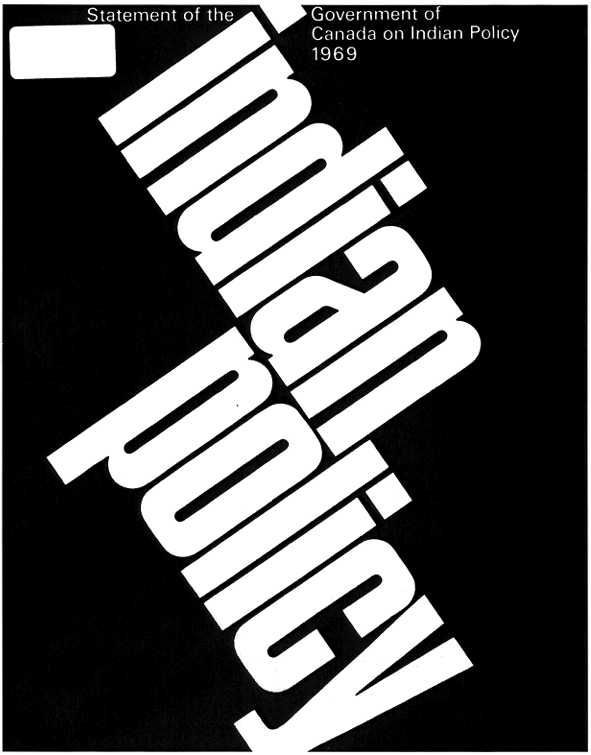
In 1969 the Government of Canada attempted to pass the “White Paper” legislation – an Act designed to rid the country of Indians and make them “white.” The 1969 White Paper (Statement of the Government of Canada on Indian Policy) was a controversial policy proposal by Prime Minister Pierre Trudeau and Minister of Indian Affairs Jean Chrétien aimed at abolishing the Indian Act, dismantling the Department of Indian Affairs, and eliminating the distinct legal status of First Nations in order to achieve “equality” through forced assimilation.
The Canadian justice system is based on the principle of one being innocent until proven guilty in a court of law – you have perpetuated the very similar practices that lead to the wrongful conviction of Donald Marshall Jr. not so many years ago – police forces prejudging the guilt of Indigenous people – you stated that the Mi’kmaw truckhouse was an “illegal” operation!
When the four RCMP members arrived on site, I personally asked each them all the following questions:
- Do you know how many recommendations came from the Royal Commission on Donald Marshall Jr.?
- Do you know how many recommendations came from the Truth and Reconciliation Commission Report?
- Do you know what year your RCMP Commissioner signed an MOU with the National AFN Chief, Perry Bellegarde, to remove racism from the RCMP as it related to policing of indigenous peoples?
- Do you know how many articles are contained in the United Nations Declaration on the Rights of Indigenous Peoples?
Not surprisingly, none of your officers could answer any of these questions. We expressed concern over how a police force could properly police any peoples without taking the time to learn about the peoples that you have a duty to serve and protect.
You speak of comments of RCMP racism as being crude and inappropriate. Somewhat hypocritical when it was your RCMP Commissioner, Bob Paulson, in 2016 who signed the MOU with the AFN National Chief recognizing the RCMP had racism within it and vowed to address it. Yet when we remind your members of this fact, we are the mean and disparaging peoples!
The RCMP relied on a “license inspection” as grounds for their actions and stated they needed no search warrant because the “license inspection” gave them authority to enter and seize materials. RCMP officer Taylor stated that he was going to his vehicle to issue a Summary Offence Ticket to the owner for selling cannabis without a license yet, at this point, no RCMP member had yet entered the building or witnessed cannabis being present.
For the record, and your education, let me remind you that the Mi’kmaq have ten treaties in effect. Treaties that have been upheld by the Supreme Court of Canada. Also, please be reminded that the Crown has a duty to uphold these treaties as they are enshrined in the Constitution. As you may be ignorant to some of the key Mi’kmaq treaty decisions let me remind you of a few:
- In Simon v. the Queen – the Supreme Court upheld that the Treaty of 1752 was still valid and binding, The Supreme Court also ruled Mi’kmaq had the right to exercise their treaty without the requirement of licenses. In short, Treaty Rights trump your licensing requirement assertions. The Supreme Court also ruled that the Crown was to interpret Mi’kmaq treaties liberally in favour of the Indians. The Supreme Court also stated that the Mi’kmaq, like all other peoples, would progress and develop over time and to attempt to hold the Mi’kmaq of today to the standards of the times in 1752 was not reasonable.
- R. v. Marshall (1999) – the Supreme Court upheld the Treaty of 1761 and ruled the Mi’kmaq had Treaty rights to earn a moderate livelihood from the exercise of Treaty Rights.
- R. v. Isaacs – stated there was no evidence that the Mi’kmaq ever ceded titles to their lands.
Article 4 of the Treaty of 1752 has the following important provision:
“It is agreed that the said Tribe of Indians shall not be hindered from, but have free liberty of Hunting & Fishing as usual: and that if they shall think a Truckhouse needful at the River Chibenaccadie or any other place of their resort, they shall have the same built and proper Merchandize lodged therein, to be Exchanged for what the Indians shall have to dispose of, and that in the mean time the said Indians shall have free liberty to bring for Sale to Halifax or any other Settlement within this Province, Skins, feathers, fowl, fish or any other thing they shall have to sell, where they shall have liberty to dispose thereof to the best Advantage.”
The Honour of the Crown is a fundamental responsibility of Crowns in their dealings with Indigenous peoples. The non-adherence to Treaties AND the refusal to recognize the unceded aboriginal title and rights of the Mi’kmaq are a violation of the Honour of the Crown in its dealing with Indigenous Peoples and in its responsibility to uphold its Constitution.
As a means of education let me share some facts:
- Canada has the Canadian Wellness Index which measures the overall health of its citizens. The lower the number the better off that population is in the country in terms of life expectancy, housing, income, health and education to name a few key items. The average Canadian ranks around 6 whereas Indians rank in the 60s.
- The United Nations has a similar index – the World Health Index – which reports the average Canadian at around 8 and some Indigenous people in Canada at 78.
- Indians were the last peoples to be recognized as having the right to vote (without giving up their status as Indians) as Canadians – ironic that the first peoples of these lands were the last to be recognized as Canadians. This happened in 1960.
- Indians across this country fought in every war Canada was involved in – many did so knowing they would be stripped of their Indian status by the same country that they were fighting for. Remember, had it not been for Canada’s indigenous peoples, Britain would have lost the War of 1812 and Canada would not be!
- The average likelihood of dying in war is about 1 in 26. The rate of death of an Indian child in a residential school was about 1 in 11. Let’s not forget the role of the RCMP in this part of history.
- The Truth and Reconciliation reports highlight the failure of police forces, including the RCMP, in responding to the many hundreds and hundreds of missing and murdered Indigenous women and girls in Canada.
The 1951 amendments to the Canadian Indian Act, a major revision of the 1876 legislation, repealed some of the most overtly oppressive, racist, and assimilationist prohibitions against First Nations people, including bans on cultural ceremonies like the potlatch and sun dance. While relaxing social restrictions, it entrenched federal control over registration, Band membership, and continued sex-based discrimination against women.
Key 1951 changes included:
- Cultural & Religious Freedom: Repealed prohibitions on traditional ceremonies (e.g., Potlatch, Sun Dance), enabling First Nations to practice their culture legally.
- Civil Liberties: Removed the ban on congregating in groups of more than three, abolished the “pass system” for leaving reserves, and lifted restrictions on appearing in off-reserve, traditional dress.
- Legal & Political Rights: Allowed First Nations to hire legal counsel to pursue land claims against the government (removing Section 141) and permitted women to vote in band council elections.
- Registration & Membership: Created a centralized Indian Register, tightening federal control over who was recognized as “Status” and creating stricter rules for band membership.
- Sex-Based Discrimination: Solidified rules where Indian women marrying non-Indian men lost their status, while non-Indian women marrying status men gained it.
- Social & Economic: Allowed First Nations to enter pool halls and consume alcohol off-reserve.
While the 1951 amendments removed some of the most archaic, coercive, and colonial elements of the Act, the legislation remained highly paternalistic, with the federal government retaining significant, direct control over First Nations’ lives.
In response to RCMP racism and harassment there have been multiple, distinct class-action lawsuits brought against the Royal Canadian Mounted Police (RCMP) by female members, civilians, and employees, primarily focusing on gender-based harassment, sexual harassment, and discrimination.
The major settlements and ongoing issues are summarized below:
1. Merlo-Davidson Settlement (Completed)
- Target Group: Female RCMP regular members, civilian members, and public service employees who experienced gender-based or sexual orientation-based harassment between 1974 and 2017.
- Outcome: A settlement was approved by the Federal Court in 2017. Over 3,000 claims were filed, and 2,304 claimants were awarded compensation.
- Total Compensation: Over $125 million was paid out to claimants.
- Key Finding: A 2020 report (Broken Dreams Broken Lives) by Independent Assessor Michel Bastarache concluded the RCMP had a “toxic” culture that tolerated misogyny and homophobia at all ranks.
2. Tiller/Copland/Roach Settlement (Completed)
- Target Group: Women working in non-policing roles, such as stenographers, cleaners, and volunteers, who were subjected to gender-based harassment or assault between 1974 and 2019.
- Outcome: A $100 million settlement was approved in March 2020 to compensate victims of harassment, sexual assault, and discrimination.
- Significance: This settlement covered women in lower-ranking positions (municipal staff, contractors) who were often overlooked in previous actions.
- Deadline: The claim submission period for this settlement ended in early 2021.
3. Current “General” Harassment Class Action (Ongoing)
- Target Group: A new class action was certified in September 2022, focusing on bullying, intimidation, and harassment, specifically for members who worked for the RCMP between January 1, 1995, and the date a collective agreement became applicable to their bargaining unit.
- Scope: This action covers general harassment and, for some, claims not covered in the previous Merlo-Davidson or Tiller settlements.
4. Ongoing Cultural Changes and Concerns
- Independent Center for Harassment Resolution (ICHR): Launched in June 2021, this, along with other “Vision 150” initiatives, aims to centralize complaints and use external investigators to address the toxic culture identified in the earlier reports.
- Systemic Issues: Despite the settlements and apologies from leadership, reports indicate that challenges in changing the RCMP’s culture persist.
In light of the foregoing, and understanding it is your duty to stand up and defend your employer, your comments can appear to be misplaced and misleading.
Given your desire to publicize such a small matter involving a Mi’kmaq person, one could properly deduce your actions lend validity to the concerns raised by persons present. Assertion of rights should not be responded to by the RCMP in a derogatory or oppressive manner – rights should be respected. We know that when we speak up for our rights, we do so in fear of joining the statistics of another RCMP fatal shooting of an Indian.
Mr, Popik: please provide the statistics on how many indigenous people have been shot and killed by RCMP in the past ten years. Provide us with the confirmation that the four officers involved in the “license inspection” had received the Indigenous Perceptions Training to aid them in their engagement with Indigenous peoples.
Please explain why the “license inspection” was led out of Kingston detachment of the RCMP when the area involved does not even fall in that RCMP jurisdiction. Please provide a report card on the actual actions the Kingston RCMP Detachment has taken to implement the Recommendations arising from the Doanld Marshall Jr., the Truth and Reconciliation Inquiry and the RCMP MOU with the AFN on RCMP racism.
The Government of Canada legislated transparency and accountability of First Nations as the Government of Canada deemed these elements essential of a good government – I look forward to your response exemplifying the same transparency and accountability tenets that your Government deemed essential for our peoples.
Three final comments Mr. Popik:
- The Commissioners for the Royal Commission on Donald Marshall Jr’s. wrongful conviction made it clear that it wasn’t as much as the system that failed Donald Marshall Jr. as it was the people who operated the system that failed Donald Marshall Jr.
- A quote from Dr. Martin Luther King Jr. – “A threat to justice anywhere is a threat to justice everywhere.”
- “Death is not the greatest loss in life. The greatest loss is what dies inside us while we live” – Norman Cousins.
We will not let our rights die! Government efforts to attrition us out of them will be met with education and our continued exercise of our Treaty and Aboriginal Rights and Title.
Kevin Brian Dorey
Federal Assimilation Number – 0250287901
Sipekne’katik