March 22, 2026
Dear RCMP Superintendent Popik,
I feel it incumbent upon me to state clearly that this letter is directed at the institutional culture of the RCMP. There are certainly many good RCMP officers in the force; however, there are also those who do not reflect the values the public would expect of its public servants. A simple Google search can attest to this reality. The fact that the RCMP has settled a number of class action legal matters concerning inappropriate institutional conduct, and that in 2016 your Commissioner signed an MOU with the AFN National Chief to remove racism from the RCMP as it relates to “Indians,” are prima facie proof of your organization’s inappropriate institutional culture.
It has been several weeks since I sent you an open letter requesting a response. To date, no response has been provided – sadly true, but admittedly expected. When I was a federal employee, we responded to every letter written to us by the public. We did so to uphold the honour of the Crown; to respect the fact that a member of the public took the time to write; to uphold our commitment to accountability and transparency; and because we could, and were willing, to explain our decisions and actions in writing. Your non-response is telling about your organization’s culture, in my opinion.
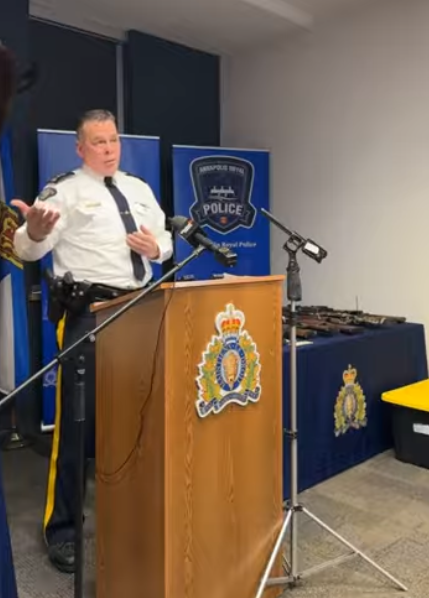
In my open letter I stated that it is incumbent on us, as Mi’kmaq, to provide education in an effort to broaden understanding, provide information, and outline the context for our actions. Having listened to your February 25, 2025 media statement, I feel it incumbent – again, in the vein of education—to correct and comment on certain aspects of your statement. You stated that the Treaty of 1752 was a peace and friendship treaty. Given that the treaty is valid, upheld by the Supreme Court, and enshrined in the Constitution, the correct statement is: “the Treaty of 1752 is a peace and friendship treaty” (not “was”). Your language suggests it no longer is a peace and friendship treaty. Was your intent to put doubt in the minds of the public by using “was”?
Second, you stated that the Mi’kmaq cannabis dispensaries are “illegal.” You are prejudging this legal matter. This type of police prejudgment is the very foundation of how Mi’kmaq Donald Marshall Jr. was wrongfully convicted and served 11 and a half years of his life wrongfully incarcerated. Over the past 37 years, has the RCMP not learned anything from the Royal Commission on Donald Marshall Jr.? Have you at least read the report?
In your media statement you stated that the Mi’kmaq’s assertion that the sale of cannabis is a treaty right was “their interpretation.” You did so in a manner that belittled or downplayed the Mi’kmaq – and other First Nations peoples’ – positions. Such actions have been the mainstay of governments for decades: to dismiss or downplay Indigenous peoples’ beliefs. For the record, here are a few such instances of our “interpretations”:
In the 1970s, Mi’kmaq leadership proposed co-management of natural resources among the Mi’kmaq, the Province, and the federal Crown. The Mi’kmaq were matter-of-factly told that their belief that they had rights was wrong—that those believed Mi’kmaq rights had been superseded by law. The Supreme Court has ruled, in many cases over time and throughout this country, that Indigenous rights were not superseded by law and remained valid and strong – to the point that the Constitution was amended to reflect this truth. Indigenous peoples one – Crown zero.
The Crown then argued the Mi’kmaq treaties were not valid. The Supreme Court ruled the Treaty of 1752 (the Simon case) was valid and remained in effect. Indigenous peoples two – Crown still zero. Courts have recognized the Mi’kmaq Covenant Chain of Treaties, which comprises some ten treaties.
Indigenous peoples throughout Canada argued they had Aboriginal rights and title, and the Crown disagreed. The Supreme Court has ruled in numerous decisions that the Indigenous position is correct. The Tsilhqot’in case in B.C. being among the latest such decisions. Indigenous peoples three – Crown zero.
The Crown argued the Simon decision applied only to James Simon, then only to Sipekne’katik, then only to mainland Nova Scotia. Mi’kmaq argued it applied to all of Mi’kma’ki, which was later recognized by the courts. Indigenous peoples four – Crown still zero.
The Mi’kmaq asserted their right to fish for a livelihood. The Crown argued no such right existed. The Supreme Court ruled in Marshall that the treaties of 1760–61 provided the Mi’kmaq the treaty right to fish for a livelihood. Indigenous peoples five—Crown still zero.
I trust you get the picture. Despite the Crown’s many attempts to limit or deny the existence of Mi’kmaq and Indigenous rights, the Supreme Court has most often decided in favour of the Mi’kmaq or Indigenous group defending the action. Second, isn’t your stated position an “interpretation” as well – your inference being that yours is better?
You stated that “the Treaty of 1752 defines commerce as involving skins, feathers, fish and it does say other materials that are appropriate.” Can you please provide a copy of the Treaty of 1752 that you have that states “other materials that are appropriate”? I have never seen this copy of the Treaty of 1752. The Treaty of 1752 I have known states the following:
“It is agreed that the said Tribe of Indians shall not be hindered from, but have free liberty of Hunting & Fishing as usual: and that if they shall think a Truckhouse needful at the River Chibenaccadie or any other place of their resort, they shall have the same built and proper Merchandize lodged therein, to be Exchanged for what the Indians shall have to dispose of, and that in the mean time the said Indians shall have free liberty to bring for Sale to Halifax or any other Settlement within this Province, Skins, feathers, fowl, fish or any other thing they shall have to sell, where they shall have liberty to dispose thereof to the best Advantage” (bolded by me for emphasis).
As you can see, the treaty text is markedly different from your rendition and says nothing about “appropriateness.” Your statements are false and misleading. For what reason did you provide this “version” of our treaty? I respectfully ask this, as I would not want to prejudge your reasoning – such actions would be markedly wrong. Additionally, a reasonable person would take from your statement, and from the many raids and “licence inspections,” that the federal and provincial Crowns’ position is that the Mi’kmaq sale of cannabis is not “appropriate.” If so, then should it be explained why it is appropriate for your governments to sell cannabis?
You stated that the treaty speaks to the commerce of the day and inferred that the Mi’kmaq were limited only to those goods available in 1752. I trust you read my previous open letter in which the Supreme Court addressed the issue of progress. The Supreme Court ruled in the Simon case that the Mi’kmaq, as with any other peoples, would progress and develop over time; therefore, they could not be held solely to the timeframe of 1752. Your assertion of such a contrary position, in my opinion, is either ignorance or a desire to have the Mi’kmaq stuck in time. In the latter situation, how should we deal with the reality that in 1752 there was no RCMP?
In your media statement you made several references to “Indian reservations.” Please allow me to address your ignorance. There are no Indian reservations in southwest Nova Scotia. There are none in Nova Scotia. There are none in Canada – unless it is for car rentals, hotel rooms, airfares, tables at a restaurant, etc., etc. The correct term is reserve. Indian reservations exist in the United States, not Canada. It is disappointing, to say the least, that an RCMP spokesperson would wrongfully use an American term to refer to Indian lands in Canada.
The Sipekne’katik Council has a Community-Based Policing Agreement in effect. The agreement does not have cannabis enforcement in it, as it was agreed between Sipekne’katik Chief and Council and the RCMP that cannabis matters would not be enforced against Sipekne’katik members. Why is this not being honoured by the RCMP?
You make reference to Article 8 of the Treaty of 1752, which states disputes shall be settled in His Majesty’s courts. You imply that this is the only means of resolving disputes, and that you are honouring the treaty. This is a disappointing position given the history that the Mi’kmaq and the British continued to address disputes and issues, post-1752, through further discussions and additional treaties. Such practice would suggest the parties included this provision to provide certainty of process – should it be needed – as a last resort when issues could not be resolved otherwise. Prime Minister Trudeau stated, when first elected, that he would rather his government negotiate rather than litigate issues with Indigenous peoples. Has this federal course of action changed? I admit it is interesting that you rely on the exact wording of Article 8 but modify Article 4 wording – is it because the wording of Article 4 fully supports the Mi’kmaq position and not yours?
In the last few weeks, the RCMP conducted a series of actions in Cape Breton and mainland Nova Scotia against Mi’kmaq cannabis operations. In one instance the RCMP all wore masks and three of the four officers refused to provide their badge numbers. The first RCMP member on scene arrived in an unmarked black SUV and exited the vehicle dressed all in black, wearing a mask. Why were your officers masked? Why did they refuse to give their badge numbers?
After the largest mass shooting in Nova Scotia by a person imitating an RCMP officer, do you really think it is safe or appropriate for RCMP to mask up? If any person were to enter an RCMP office masked up, I am confident the RCMP response would be heightened – even more so if the person were armed as well. I would suggest that any time the public and police see a masked person with a weapon, we are in fear. Why create such an environment? Do you fear what you are doing is wrong and therefore want to hide your identity from the public? Do you fear harm or retaliation? If you fear harm or retaliation, let me offer these truths:
During the 2020 Saulnierville fishing matter, the issues the Mi’kmaq had with the RCMP were addressed through appropriate administrative and legal processes. There was no physical violence against the RCMP by the Mi’kmaq – the Mi’kmaq remained peaceful in the face of great potential for violence against them and direct interference with their treaty right to fish for a livelihood. There were no charges against any Mi’kmaq person. However, more than two dozen non-Indigenous persons were charged – some with serious criminal charges – including many for arson.
During the many recent Mi’kmaq cannabis raids, no Mi’kmaq were charged with physical violence against an RCMP officer. Mi’kmaq people remained non-violent in the face of their property being taken, their livelihoods disrupted, and their exercise of treaty rights infringed.
Why would the RCMP fear harm or violence when history provides more than ample proof that the Mi’kmaq have remained peaceful in the face of being harassed, threatened, assaulted, and criminalized for the exercise of their rights? Why were RCMP officers angry when they raided a Mi’kmaq cannabis operation only to find it had ceased operations? Shouldn’t they have been pleased that the intended effects of their previous actions/raids were successful?
The Treaty of 1752 provides the Mi’kmaq with the same benefits, advantages, and privileges as any others of His Majesty’s subjects in its courts. The 23 non-Indian arson charges from the 2020 Saulnierville event were all dealt with through the use of “restorative” justice. Arson is a Criminal Code matter. The current cannabis charges are merely summary offence tickets. In the extremely unlikely event the courts rule against the Mi’kmaq, will they be afforded the same treatment as your other subjects, as set out in this paragraph?
In Canada, the doctrine of paramountcy is a constitutional tool that helps resolve conflicts between federal and provincial laws. Under this doctrine, a provincial law that conflicts with a federal law will be inoperative to the extent of the conflict. This means federal legislation takes precedence over provincial legislation. While the provincial law remains valid, the portion of it that conflicts with federal law will cease to apply for as long as the conflict exists. This inapplicable portion can become operative again if the federal law is amended in the future to resolve the conflict. Given that the Constitution is the supreme law, and our treaty and Aboriginal rights are enshrined in sections 25 and 35 of it, why are you enforcing a law of lesser paramountcy – i.e., provincial cannabis law which is not only trumped by the Constitution, but also by s. 88 of the Indian Act which states that provincial law applies to Indians “subject to the terms of any treaty”?
A few years ago, I was speaking with a Mi’kmaq elder about a situation in which I felt the federal government was making a poor decision. The elder explained to me that maybe the decision was made in ignorance – meaning the decision-makers may not have been aware of all the information prior to their decision. She explained that we are responsible for providing education to improve understanding and support better decisions.
I embarked on this undertaking over the next year by researching and providing letters and information to the decision-makers; their decision remained unchanged. In speaking again with the elder, she stated that I now had my answer. She explained that when education fails to change the minds of decision-makers, then you are dealing with the arrogance of the decision-maker.
Looking forward – but not expecting – to hearing from you, Sergeant Popik.
Kevin Brian Dorey
Federal Assimilation Number 0250287901
Sipekne’katik