‘After eight long years, we’re still dealing with the same issues,’ Dan Christmas tells senate committee.
From APTN by Jesse Staniforth May 1 2026
A former senator says First Nations should have a protected right to control cannabis in their communities without interference from provincial authorities.
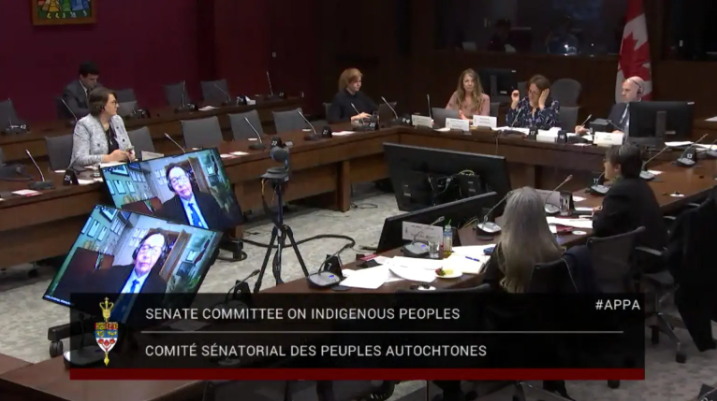
Dan Christmas, from the Mi’kmaw Membertou First Nation, spoke to the Senate Standing Committee on Indigenous Peoples on April 29 about the government’s response to a report on the implementation of Canada’s cannabis laws and its effects on Indigenous communities.
He focused on the issue of First Nations regulating the distribution, sale and possession of cannabis.
Christmas proposed a specifically worded amendment to the Cannabis Act which would give Indigenous communities the same control of cannabis as they do with child welfare services.
The clause, he suggested, would read, “The inherent right of self-government, recognized and affirmed by Section 35 of the Constitution Act 1982, includes jurisdiction in relation to health, safety, and well-being, including legislative authority in relation to those services pertaining to cannabis and authority to administer and enforce laws made under that legislative authority.”
“I would strongly encourage this committee to adopt an amendment to the Act,” Christmas said, “that clearly and explicitly recognizes the inherent right of self-government over cannabis.”
Christmas noted Ottawa’s preference has been for First Nations to develop agreements with provincial and territorial governments, with whom they have no historical relationship.
But he noted that efforts by the Assembly of Nova Scotia Mi’kmaq Chiefs to work cooperatively with the province in regulating cannabis on First Nations lands have been for nothing.
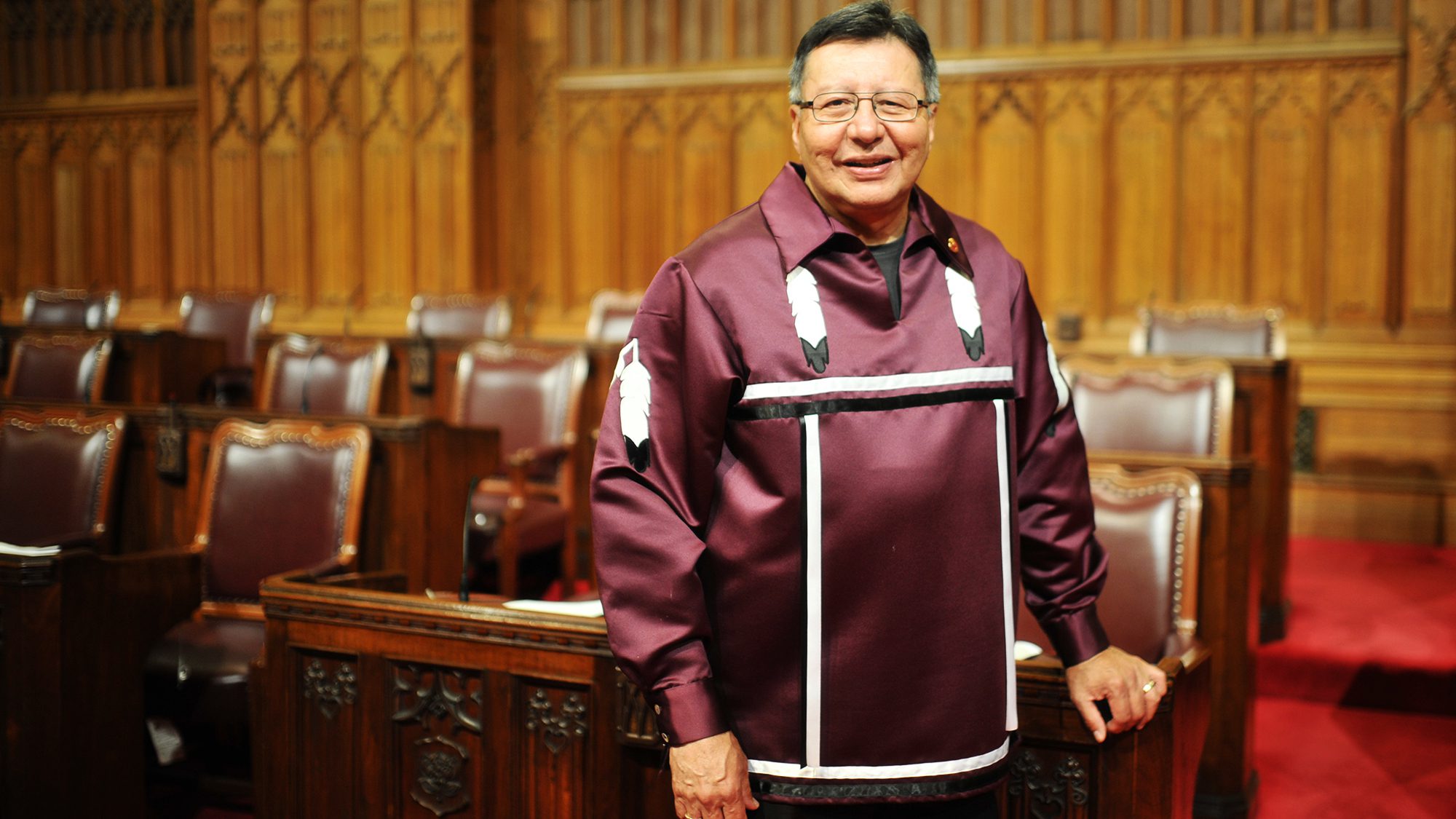
“Rather, the province of Nova Scotia has directed the RCMP to shut down First Nations cannabis retailers by force,” Christmas told the committee. “Since March 3, the RCMP have raided at least eight First Nations stores, and in the process, the province’s hardline approach has put in jeopardy the once collaborative relationship between the Assembly and the province of Nova Scotia.
“Several Nova Scotia First Nations have already asserted their inherent right by enacting their own legislation on cannabis.”
An atmosphere of raids
Nova Scotia’s raids on cannabis dispensaries in Mi’kmaq territories have been a flashpoint for debate in recent months. They began with an order in early December, 2025 by Nova Scotia Attorney General and Justice Minister Scott Armstrong to “intensify enforcement” of unlicensed cannabis retailers.
That began a period of increased raids, still ongoing, against cannabis operators in Mi’kmaq communities in Nova Scotia.
Armstrong sent a letter to 13 Mi’kmaq chiefs asking for their cooperation in the raids in their communities in order to tackle “a growing public safety problem.”
In a statement on Facebook, the Assembly of Nova Scotia Mi’kmaq Chiefs responded, “The contents of that letter are not a fair description of the process or the reality on our reserves. There are Aboriginal and Treaty rights involved here.”
Matthew Cope is a Mi’kmaw cannabis operator from Millbrook First Nation, located roughly between Halifax and Moncton. Cope has been raided multiple times and charged, and is involved in an ongoing court case (under appeal) associated with some of those charges.
He said Mi’kmaw opposition to the raids was a question of Indigenous sovereignty.
“This completely has to do with the right to trade,” he told APTN News. “The act of trading has evolved in Canada to encompass cannabis. When we make this argument, it’s not just about the right to sell cannabis. It’s the right to engage in trade in our territories.”
Nova Scotia Premier Tim Houston inflamed the controversy when he claimed a law-enforcement source had told him they had seized unregulated cannabis sold on reserve spiked with dangerous opioids such as fentanyl.
Nova Scotia RCMP and Halifax Regional Police (HRP) refuted that claim, saying they had not seized cannabis products adulterated with fentanyl, nor had HRP.
Mi’kmaq leaders consequently pressed Houston to apologize for the claim, which he did not.
As raids intensified over the winter, some communities banned the premier and his ministers from their lands, adopting roadblocks and checkpoints.
Chief Terry Paul of Membertou First Nation issued a statement in early March.
“Let us be clear that the Mi’kmaq have a collective treaty right to the sale of cannabis. We have the right to self-determination in our communities. We govern our people, lands, and priorities — not the province,” he said.
In early April, members of several Mi’kmaq communities blocked three Nova Scotia highways, demanding a moratorium on the raids.
In response, Houston wrote on social media, “The unlawful obstruction of others is not peaceful. It undermines public safety, respect for law enforcement and the rule of law itself.”
Some of the blockades occurred in response to raids against cannabis dispensaries in the Potlotek First Nation.
“Enforcement without respect for Mi’kmaw jurisdiction does not create safety. It creates conflict, increases tension and places public safety at risk,” said a statement from Potlotek leadership.
Alternative approaches
Rather than stoking conflict, several Indigenous speakers before the Senate committee were more interested in discussing solutions and pathways toward stable, regulated cannabis in Indigenous communities, on those communities’ terms.
Sara Mainvillle, also known as Flying Around Thunderbird Woman, is a former chief of Couchiching First Nation in Ontario and managing partner at Indigenous legal firm JFK Law. She stressed that First Nations generally wish for broader oversight over cannabis in their communities, but that they don’t want this oversight to come from non-Indigenous governments.
“First Nations want to be able to enforce cannabis laws on their lands,” she told the senators. “Many […] want to have licensed cultivation and processing facilities, which of course are federal jurisdiction, along with retail stores, which are provincial jurisdiction. And we don’t have the friendliest environment for provincial relations in many of these regions in order to have partnered work together to have a clear solution in many of these provinces.”
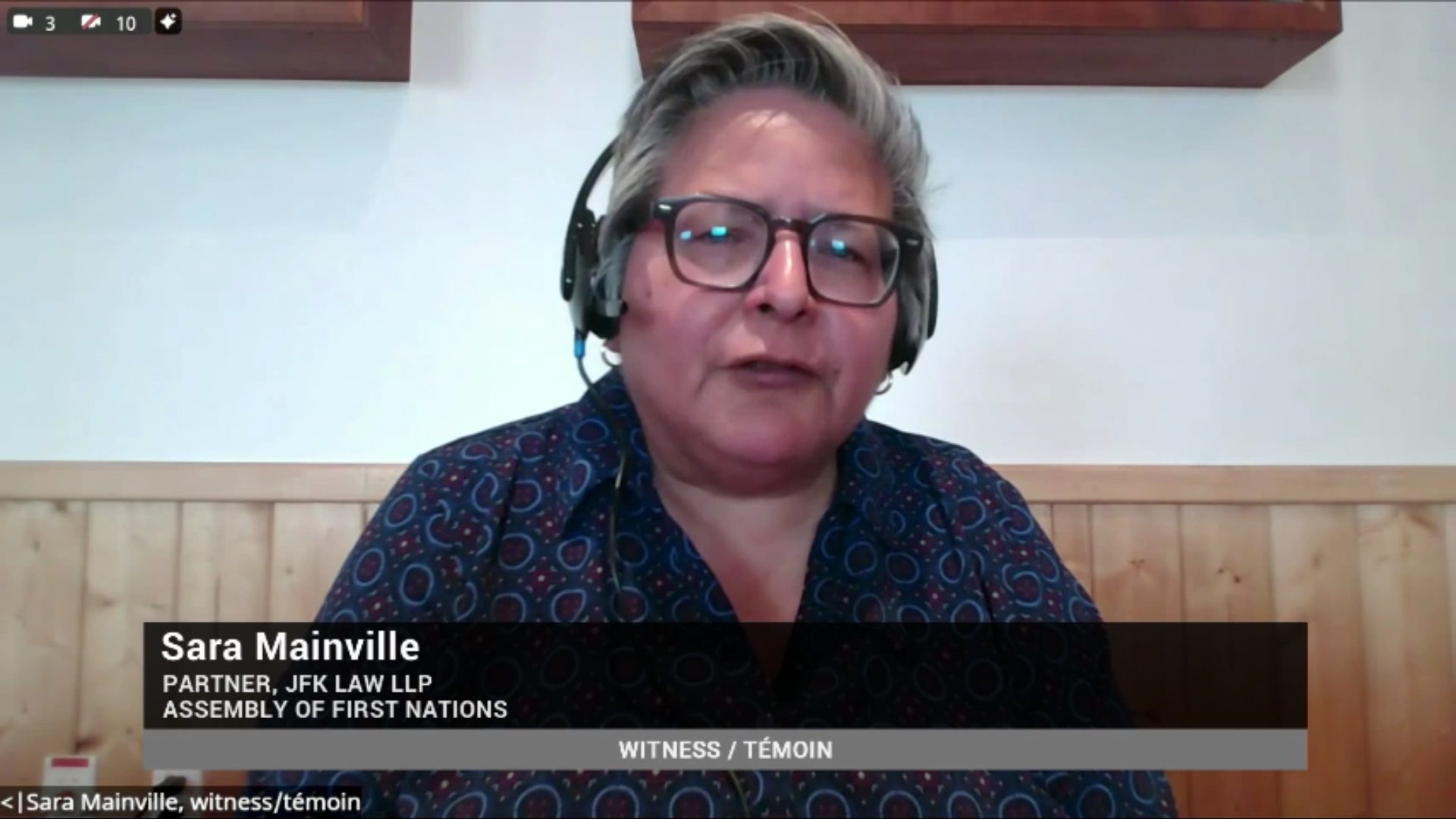
Mainville dismissed the approach taken by the Nova Scotia government.
“It’s really bad reconciliation policy to not be working with First Nation leadership in Nova Scotia to find the right solution in the case of cannabis law enforcement with them,” she told the senators. “There is a First Nation solution. I think that’s the best step forward, to let the First Nation leadership take the lead.”
Mainville wondered whether the most successful cannabis stores on reserve have been illegal. While she noted a handful of provincially licensed stores exist on reserves, she said the majority of successful on-reserve businesses across the country are associated with tax avoidance.
“Settler populations go to on-reserve stores for cheap gas, cigarettes and cannabis,” she said. “It makes no sense to provide highly taxed cannabis products found within the Cannabis Act regime. There are ready-made solutions.”
One idea she proposed was for the Cannabis Act to create an opening to license personal growers through the federal Access to Cannabis for Medical Purposes Regulations, from which those growers could offer their products to unlicensed “grey-market” dispensaries on reserve.
Mainville noted that in a previous appearance before the committee, she discussed the desirability of “grey markets”—which sell legally produced cannabis in an environment not licensed by the provincial or federal governments—to First Nations entrepreneurs.
“It has an accessible opportunity, and it requires fairly little investment,” she explained. “I think there has to be a good opportunity to basically get out of the way and let First Nations regulate this important issue for themselves, by themselves, and allow for legal solutions for First Nations across Canada.”
She noted that the criminalization of “grey market” cannabis retail on reserve has marked participants as law-breakers.
“Despite being a grey market, there’s some good actors that really believe in cannabis and have believed in cannabis all along, but just can’t get into the production of this medical quality cannabis, because it’s so expensive,” she said.
Challenges and squandered opportunities
Another speaker before the committee, Kahnawake Mohawk Territory Council Chief Tanya Perron, noted that while the federal government has not provided funding to help Indigenous businesses enter the cannabis trade, cannabis licensees in First Nations are nonetheless beholden to the same taxation rules as non-Indigenous cannabis operators.
“Licensees must comply with Canada Revenue Agency rules and pay excise duty. That duty is, I might add, not shared with the First Nations,” she told the senators. “Canada Revenue Agency is not flexible to the realities of First Nations. Applying CRA rules within Kahnawake is not in line with a nation-to-nation relationship.”
Perron called for the application of principles set out in the UN Declaration on the Rights of Indigenous Peoples, also known as UNDRIP, as well as amendments to the Cannabis Act and other acts related to it.
“Finally,” she said, “it is recommended that an Indigenous excise stamp for cultivators and processors located within First Nations territory be created, where the money is remitted to the First Nation.”
Had the province of Quebec been open to cooperation with Kahnawake Mohawk Territory, Perron said, there might be a successful system in place in the community by now.
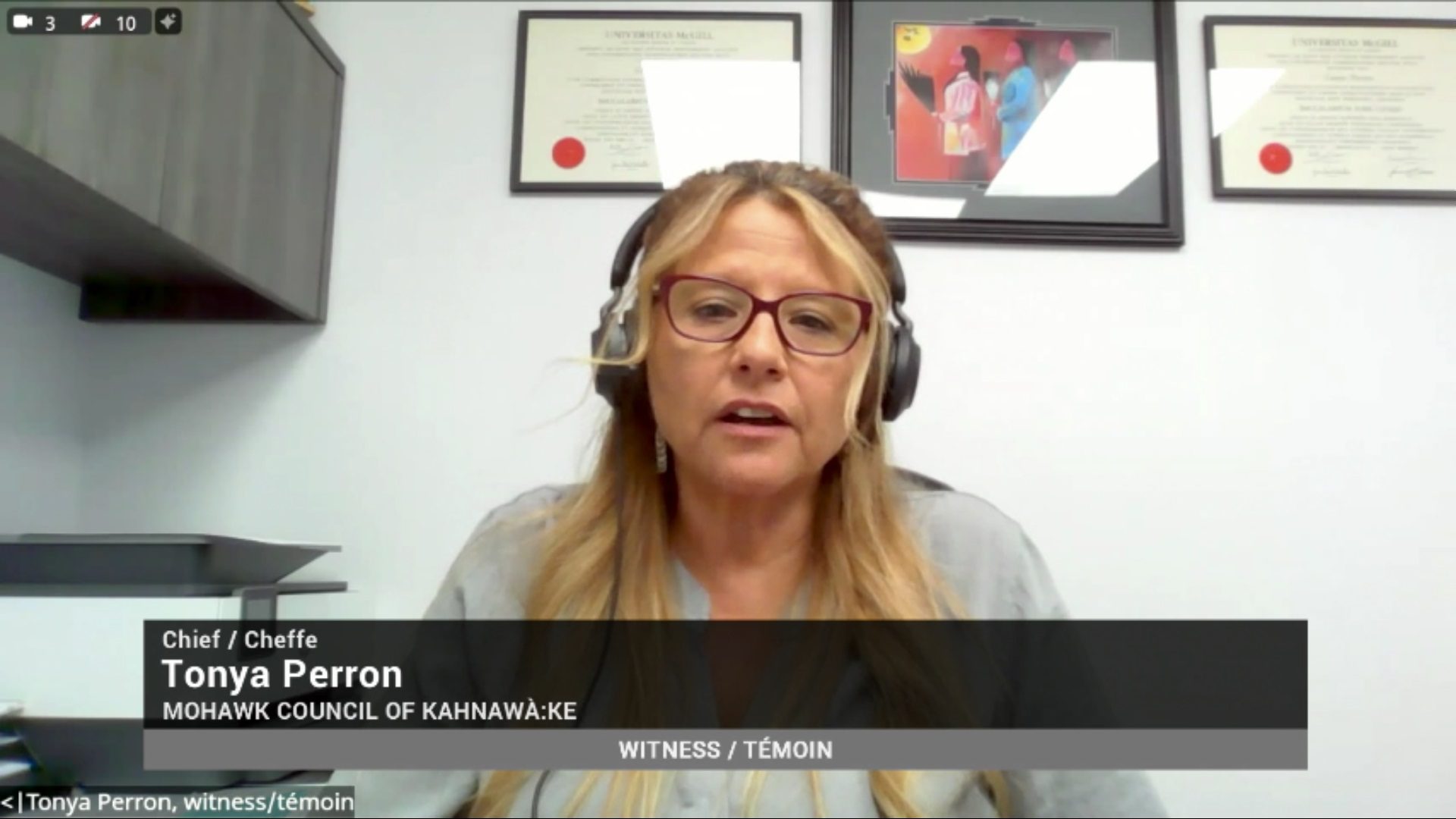
Instead, she noted, “it [was] just the province saying, ‘You have to have exactly what we have in your community.’ Because we were left to the province of Quebec, we were never able to get an agreement in place with them for legal products. We had many, many conversations with the province, but that’s all that they were: conversation after conversation after conversation, to no end.”
“The government has to do better to walk the talk and deal directly with First Nations, not through the provinces and not through advocacy groups,” Perron said.
Mainville noted she has been working with a variety of First Nations to develop their own cannabis laws, including her own community of Couchiching, as well as the Mohawks of the Bay of Quinte [Tyendinaga] and Membertou First Nation.
In Membertou, she said community members were open to bylaws laying out common rules limiting cannabis activities.
“At one time there was 30 stores in Membertou, and [there were] impacts on traffic in the community because these are all inside of neighbourhoods,” she said. “One of the common rules that they’re thinking about is, ‘Should we be open before the school bus leaves the community, or make sure that the school bus run happens before we open up our stores?’ So there’s an openness about things like that that makes sense to everyone.”
Exercise of jurisdiction, Mainville noted, has the capacity to be a win-win for both First Nations and provincial and federal governments.
“These communities are just a few examples of the exercise of inherent First Nation jurisdiction in relation to cannabis,” she said. “The opportunity for economic pathways is being squandered in Canada.”
The Cannabis Act
The Cannabis Act, 2018, which legalized cannabis in Canada, began its life as Bill C-45. From the time of its tabling by then–Justice minister Jodi Wilson-Raybould, Bill C-45 was assailed by Indigenous critics for not making any mention of “First Nations” and only a single mention of “Indigenous persons and communities.”
In March of 2018, the late senator and TRC Commissioner Murray Sinclair—then a member of the Committee on Indigenous Peoples—called for amendments to the bill with Indigenous communities in mind to prevent it from deepening problems on reserve.
Sinclair ultimately voted to pass the bill, albeit following promises from then–Health minister Ginette Petitpas Taylor and then–Indigenous Services minister Jane Philpott to increase funding for Indigenous mental health and addiction treatments, as well as support for Indigenous businesses wishing to enter into the cannabis licensing process.
Christmas noted in his statements that from the time Bill C-45 was initially before the same committee he was addressing in 2018, the right of First Nations to regulate the distribution, sale and possession of cannabis in their own lands was a pressing concern for many witnesses.
He quoted from a pre-study report on Bill C-45 prepared by the Senate.
“The Committee strongly believes that under section 35 of the Constitution Act, 1982, Indigenous peoples have the inherent right of self-determination, including the appropriate law-making authority to make meaningful decisions that affect the lives of their people and communities, including regulating cannabis.”
Read more:
Mi’kmaq have a treaty right to sell cannabis says Membertou chief amid new raids in Nova Scotia
Case of Mi’kmaq man facing cannabis charges moves to constitutional challenge in N.S.
Additionally, the report recommended the government recognize Section 35 rights as well as rights under Articles 3 and 4 of UNDRIP, in order to allow Indigenous communities to establish their own cannabis laws.
“Despite written assurances […] in a letter dated June 6, 2018 by the then minister of Health, Ginette Petipas, and the minister of Indigenous Services, Jane Philpott, that, ‘The government recognizes and respects the jurisdiction of indigenous communities,’” Christmas said, “no meaningful action has been taken by the government.”
Christmas also said that as part of the government’s current response to the committee’s 2023 report on the Implementation of the Cannabis Act, Ottawa acknowledged the Cannabis Act prevents Indigenous governments from regulating cannabis in the same manner as federal and provincial governments.
“It further cites the expert panel’s 2024 report in its conclusion that, ‘The act’s lack of recognition of jurisdiction and authority as an omission that is inconsistent with the principles of self-determination and reconciliation,’” Christmas said.
“It was as if the original Cannabis Act was deliberately implemented to have minimal involvement of Indigenous people,” he said. “Clearly, the Cannabis Act has failed to accommodate First Nations jurisdiction to regulate the health, safety and well-being of their communities as it relates to cannabis.”
Not only did the Cannabis Act impose laws and regulations contrary to those of First Nations that wished to regulate their own cannabis industries, Christmas noted, but it also forced the acceptance of cannabis in communities that wished to oppose cannabis outright. He recalled a visit by the committee to the Vuntut Gwitchin First Nation in Old Crow, Yukon, a community that had banned cannabis.
“This Cannabis Act basically allowed it to come into the community against their wishes,” Christmas said.
Christmas identified in the Cannabis Act a lack of understanding of or appreciation for how First Nations and other Indigenous communities govern themselves.
“After eight long years, we’re still dealing with the same issues,” he said. “Some issues are worse. Still, the position of the government is that there’s only two laws that you need to follow. One is the Cannabis Act and the second is the provincial Acts on Cannabis. There is no mention at all about the First Nations’ ability to look after themselves, especially when it comes to health and safety.
“I find that just utterly unbelievable in this day and age. We fail to recognize that community-based solutions, when people come together and they talk about these issues and they come to a consensus on how to deal with them, that carries more weight than any federal and provincial law.”
Since 2023, Christmas has been in charge of developing cannabis law for his community of Membertou, which recently announced another round of community engagements.
“We’re going to continue doing those rounds until we have developed a strong consensus about how to manage ourselves,” he told the senators. “I can tell you that approach will guarantee that the law will be respected by all. The community approach, I believe, is the right way. Just enforcing top-down laws has been a game that First Nations have played for a long time. The track we’re on, just ignoring self-determination and self-government, is not a solution.”